
Aerial Work Platform

p. 1. History of Creation and Development
If you have decided to rent or buy an aerial work platform, let's together understand the nuances of this device. The prototype of all modern aerial work platforms was an invention of the Macedonians, which was intended for besieging fortress walls. The 'City Taker' had a platform for warriors at the top. It operated with a capstan drive for movement. It could accommodate up to 10 catapults and around 200 experienced archers. There were also versions for lifting cargo. Gradually, the development and complication of this equipment took place. It happened in the Middle Ages in different countries. In the 17th-19th centuries, a manual drive appeared. The efficiency of the device increased many times. The construction acquired its modern form in the mid-20th century. Although attempts to solve the problem of delivering people and heavy loads to heights were made regularly. The ancestor of the lift was an ordinary lever. It was fastened to the base by means of hinges. On one side, a traction rope was attached, on the other, a heavy counterweight. Initially, it worked using the muscular efforts of animals or people. Then people invented a winch with a rope winding system. This became an evolutionary step in the development of this type of mechanism. The manual drive was first replaced by treadwheels. Lifting weights became noticeably easier, lighter, and faster. This variety existed until the middle of the Middle Ages. They helped to carry out loading and unloading operations on ships, erect solid and monumental structures. The basis for the creation of mobile installations for lifting cargo and people to heights was the appearance and development of compact types of motor transport. Frame devices with an invariable winch were now mounted on the body of a cargo vehicle. At the same time, stationary cranes of the boom type with mechanical or steam drive were used. In the middle of the 20th century, hydraulics appeared. It became a mandatory component of such a device as an aerial work platform. The first model saw the light in 1960 at the Leningrad plant. A luxurious three-section boom on hinges. It became the 'mother' of all articulating lifts that exist. 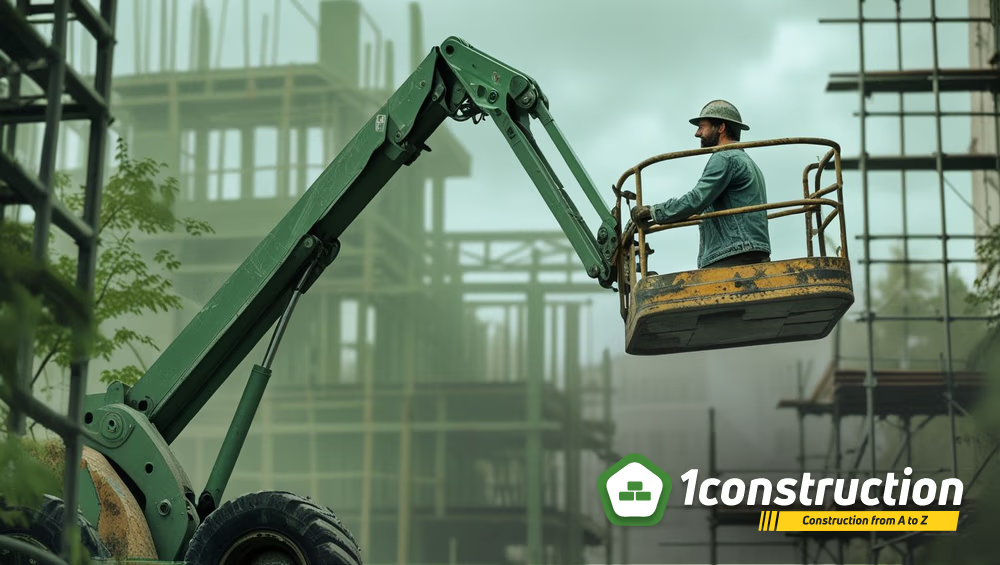
p. 2. Main Functions
Modern aerial work platforms characteristics have features that significantly facilitate most high-altitude tasks, making them safer and more comfortable. They can lift people, workers with loads, or various heavy items, tools, materials, etc., to a specified height. The available height indicators depend on the type and length of the boom. The lifting capacity depends on the power of the model of this specialized equipment. There is no need to buy such an expensive machine if you have a very small amount of work or if they occur only occasionally. In this case, the aerial work platform rental service can help. Then it will be enough to hire the equipment for a few hours or shifts. In this case, you will not have to incur significant expenses for purchasing, maintaining, operating, and repairing such equipment. You should only buy such equipment if there is a constant and large volume of work with its active use.
p. 3. Areas of Application
Classic use of aerial platforms:
- carrying out repair works (power lines, street lighting, illuminated advertising, facades, etc.);
- conducting rescue operations;
- lifting cargo and people to permissible heights;
- installation of small architectural forms, various decorative or advertising structures, festive decorations;
- cleaning or finishing works on surfaces of bridges, facades, overpasses, roofs, ceilings;
- mounting elements on building facades: air conditioners, ventilation systems, windows, cameras for outdoor surveillance;
- delivering teams of builders or repairmen to heights;
- shooting videos and films;
- trimming tall bushes and trees. Moreover, renters and owners of such structures constantly invent new and new areas of application for their capabilities. Here, everything is limited only by common sense and one's own ingenuity.
p. 4. Principle of Operation
The main principle of operation, like the parameter boom lift price, is extremely simple and easy to understand. It lies precisely in the masterfully accurate control of the boom. It is the boom that performs all manipulations with the platform and allows achieving set goals safely, accurately, and in a short time. Positioning for performing work tasks is extremely important. After all, it constitutes the lion's share of success and guarantees that the quality of the result will be high. The boom is set in motion by the hydraulics of this type of special equipment. It is the hydraulics that ensure smooth adjustment of the angle of inclination and length. The auto hydraulic lift of the boom lift is mounted on the platform of a cargo vehicle. For reliable fastening, special fixators are provided. When the specially provided 'Start' button is pressed, work processes begin under the control of the driver. It is located on the control panel. It is important to ensure that the balance is not disturbed. Otherwise, you may encounter the overturning of the working platform or basket. For this purpose, a special stopper is provided for reliable fixation. It is permissible to place workers, cargo, or employees with materials and necessary tools for performing set tasks on the platform. To better understand the nuances, the review of boom lifts on the construction portal Vstroykebel will help.
p. 5. Advantages and Disadvantages
Each type of aerial work platform has its own merits and drawbacks.
p. 6. Truck-Mounted Aerial Platforms
Advantages:
- high mobility;
- easy operation;
- no additional transport required for moving significant distances;
- high load capacity and accessible height.
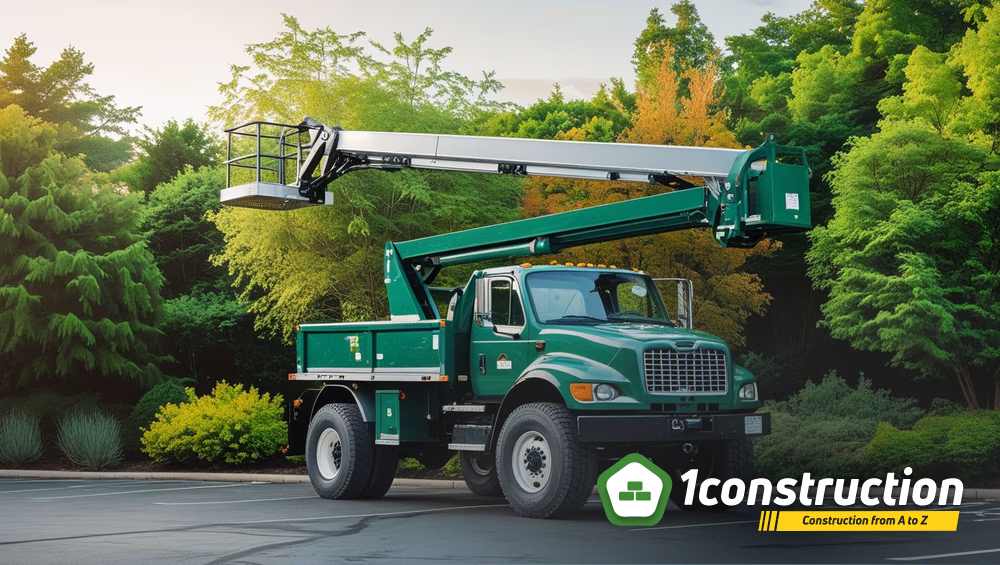 Disadvantages:
- lift height has limitations that need to be considered;
- may not be suitable if the ground has a low bearing capacity.
p. 7. Based on Chassis
Advantages:
- High stability (wide base);
- Can operate on surfaces with a slight incline;
- Additional equipment can be transported with them.
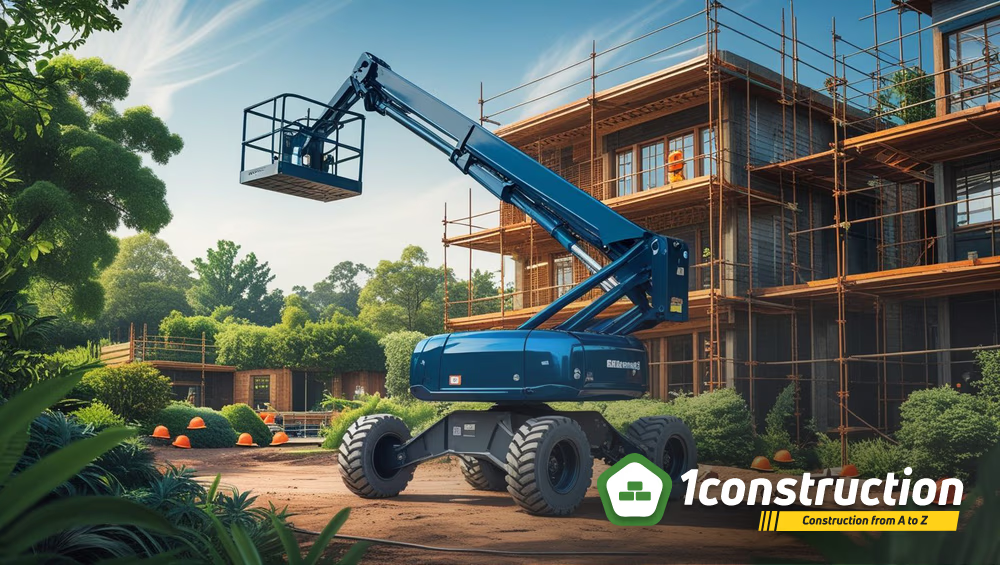 Disadvantages:
- Maneuverability is limited (bulky special equipment);
- Access roads must be in good condition and suitable in height and width.
p. 8. Truck-Mounted Aerial Platforms
Advantages:
- Compact size. Ideal for working in confined spaces or densely built-up urban areas;
- Lightweight. Suitable for use on soils with low bearing capacity. Disadvantages:
- Working height is strictly limited;
- Not suitable for tasks requiring high load capacity.
p. 9. Telescopic Boom Lifts
Advantages:
- high load capacity;
- significant height reach; Disadvantages:
- maneuvering difficulties;
- high maintenance and repair costs.
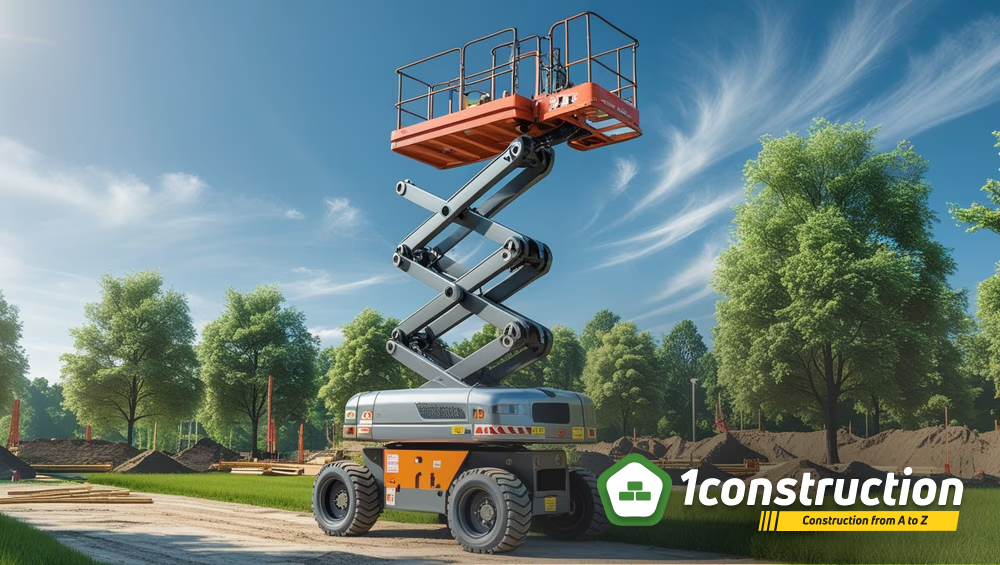 Limited maneuvering capabilities.
Articulating Boom Lifts
Advantages:
- can operate in hard-to-reach areas;
- high maneuverability;
- can work in confined spaces. Disadvantages:
- lower working height and load capacity compared to telescopic types;
- longer setup time.
